Osteopenia and Osteoporosis: What You Can Do to Build Stronger Bones
Fitness - July 29, 2026
Osteopenia and osteoporosis diagnoses are becoming more and more common, especially as we age and particularly among women after menopause. While hearing either diagnosis can be intimidating, the good news is that there are things you can do to slow bone loss—and in many cases, even improve your bone density.
First off, what exactly is bone density, and what do these conditions mean?
Bone density is a measurement of how strong and mineral-rich your bones are. Throughout our younger years, our bodies are constantly building new bone. In fact, most people reach their peak bone mass by around age 30. After that, the natural breakdown of bone slowly begins to outpace the body's ability to rebuild it. Factors like aging, hormonal changes, poor nutrition, certain medications, and inactivity can all accelerate this process.
Osteopenia simply means your bone density is lower than normal, but not yet low enough to be considered osteoporosis. Think of it as a warning sign. As bone density decreases, bones become more porous and less able to handle stress. If bone loss continues, osteopenia can progress to osteoporosis, significantly increasing the risk of fractures.
Now, having a higher risk of fractures doesn't mean your bones are going to crumble overnight. But it is something to take seriously. As we age, balance, reaction time, and muscle mass naturally decline, making falls more common. A stumble that may have resulted in a sore wrist years ago could now lead to a fractured wrist or broken hip. Unfortunately, hip fractures in older adults often lead to a loss of independence and can require lengthy recoveries. That's exactly why prevention matters.
Fortunately, there are effective ways to fight back.
One of the first recommendations healthcare providers make after an osteopenia or osteoporosis diagnosis is to increase weight-bearing activity and resistance training. These are two of the most effective, research-supported ways to help maintain and improve bone density.
Weight Bearing Exercise
Weight-bearing activities are exercises where your body works against gravity while your feet are in contact with the ground. Think walking, hiking, climbing stairs, dancing, playing pickleball, carrying groceries, farmer carries, or even appropriately programmed hopping and jumping exercises. These activities create small amounts of stress on your bones, signaling your body to strengthen them over time.
Strength Training
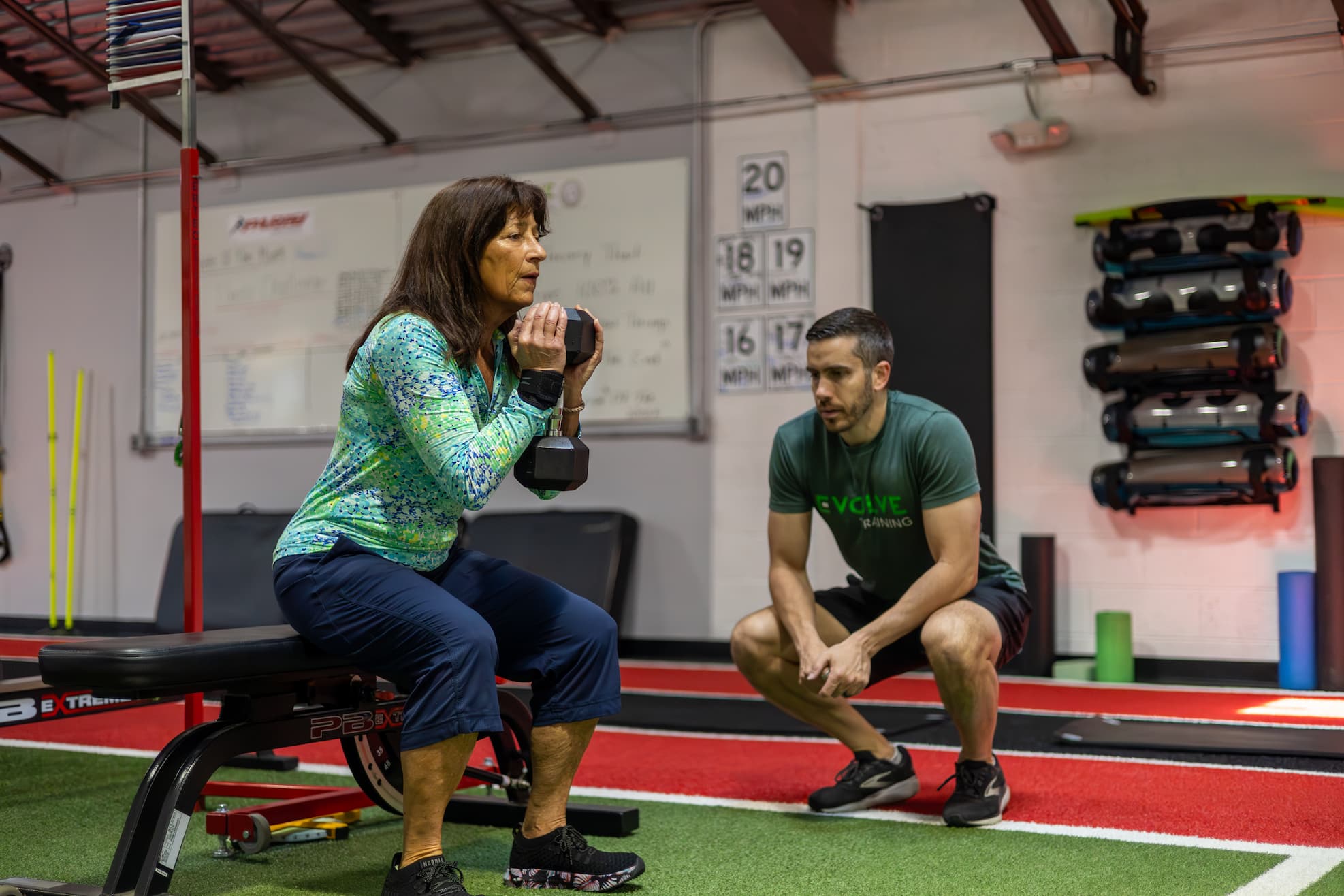
Resistance training is equally important. This includes using dumbbells, barbells, resistance bands, cable machines, sleds, or even your own body weight. When your muscles pull on your bones during strength training, they stimulate the bone-building cells responsible for maintaining bone health. As an added bonus, resistance training also improves balance, coordination, and muscle strength, which helps reduce the likelihood of falls in the first place.
Exercise is only one piece of the puzzle. Getting enough calcium and vitamin D is also essential, since your body needs both to build and maintain healthy bones. Protein intake matters as well because bone is made of more than just minerals—it also contains a strong protein framework that gives it structure. If you've been diagnosed with osteopenia or osteoporosis, it's worth discussing your nutrition and any supplementation with your physician.
The important thing to remember is that it's never too late to start.
Begin by adding a daily walk before or after work. Talk with your trainer about safely progressing your strength training. If appropriate, work in a few low-level hops, carries, or impact exercises as your body allows. The key is consistency, not perfection.
We have multiple clients who have trained with us after being diagnosed with osteopenia or osteoporosis. Some have maintained their bone density, while others have actually improved their numbers at follow-up bone scans. That's incredibly rewarding to see because it proves that exercise isn't just about looking better or getting stronger—it's about building a healthier future.
Your bones are living tissue. Give them a reason to stay strong, and they'll continue working for you for years to come.