Strength Training During Menopause: Why It Matters
Fitness - September 16, 2026
Menopause: A big topic and a big change.
What exactly is happening in your body? What effects do these hormonal changes have, and what can you actually do to help your body through this transition?
There is a lot of information out there about menopause, and honestly, some of it can be pretty overwhelming. Hot flashes, mood changes, poor sleep, weight changes, loss of muscle, changes in bone density... the list can feel endless. The good news is that while you can't stop menopause from happening, there are things you can do to support your body through the process.
And one of the most important tools you have is strength training.
First, What Exactly Is Menopause?
Before we talk about strength training, let's talk about what's actually happening.
Perimenopause is the transition leading up to menopause. It can begin in your 40s, although the timing varies from person to person, and it can last for several years.
During perimenopause, your ovaries gradually begin producing less estrogen and progesterone, and ovulation becomes less consistent. These hormonal changes aren't necessarily a smooth decline. Hormone levels can fluctuate quite a bit, which is one reason symptoms can seem unpredictable. Hot flashes, night sweats, mood changes, sleep disruption, irregular periods, and changes in how you feel day to day are all common. Some women experience many of these symptoms, while others experience very few. There really isn't one "normal" menopause experience.
You've officially reached menopause once you've gone 12 consecutive months without a menstrual period, assuming there isn't another medical reason for the missed periods. Menopause itself is essentially a point in time. After that, you are considered postmenopausal.
Some symptoms improve once you've moved through the transition, while others can continue for several years. But menopause isn't just about the symptoms you notice day to day. The changes in estrogen that occur during this transition also affect several systems throughout your body.
This is where things like bone health, muscle mass, cardiovascular health, body composition, and overall physical function become especially important. And while that may sound a little doom and gloom, there is a lot you can do to support your health through this stage of life.
Bone Health
We've talked before about osteopenia and osteoporosis, and menopause is an important part of that conversation.
Estrogen plays a significant role in maintaining bone tissue. As estrogen levels decline during the menopausal transition, the rate at which bone is broken down can begin to outpace the rate at which new bone is formed. Bone loss can accelerate around the time of menopause, particularly in the years immediately before and after the final menstrual period. Over time, that loss can increase the risk of osteopenia, osteoporosis, and fractures.
This is one of the reasons strength training becomes so important.
When you lift weights, your muscles pull against your bones and create mechanical stress. Your bones respond to that stress by signaling the cells responsible for maintaining and building bone tissue. Weight-bearing activities such as walking, hiking, stair climbing, and certain appropriately programmed impact exercises can also provide this type of stimulus.
It's not about trying to make your bones "strong overnight." It's about consistently giving your body a reason to maintain them. And the earlier you make strength training part of your routine, the better positioned you are to maintain strength and bone health as you get older.
Muscle Mass and Sarcopenia
Another major change we need to pay attention to is muscle.
Sarcopenia is the age-related loss of muscle mass, strength, and physical function. Some degree of muscle loss is a natural part of aging, but hormonal changes during and after menopause can contribute to this process.
Why does that matter?
Because muscle isn't just about how you look.
Your muscles help you climb stairs, get up from a chair, carry groceries, lift your kids or grandkids, maintain your balance, and catch yourself when you stumble. The more strength you maintain, the easier those things tend to be.
Resistance training stimulates muscle protein synthesis and gives your body a reason to maintain and build muscle. Over time, consistent strength training can help improve muscle mass, strength, balance, and physical function.
And this is where strength training becomes about much more than lifting heavier weights.
It's about maintaining the ability to do the things you want to do.
Changes in Body Composition and Weight
Weight changes are another common concern during and after menopause.
Hormonal changes affect where your body stores fat. While aging itself is associated with changes in muscle mass, activity levels, and energy expenditure. Menopause, unfortunately, contributes to these changes.
One important distinction: menopause doesn't suddenly "break" your metabolism.
Your metabolism is influenced by many things, including age, body size, muscle mass, activity level, and overall energy intake. As we age, maintaining muscle and staying physically active become increasingly important.
This is another reason strength training is such a valuable tool.
Building and maintaining muscle helps you maintain your physical function and supports your daily energy needs. Strength training also burns energy during the workout itself, while maintaining more muscle can help support a higher resting energy expenditure compared with having less muscle.
But the goal shouldn't be to exercise just to burn off what you ate. The goal is to build a body that is strong, active, and capable.
If body composition or weight loss is one of your goals, strength training can be an important part of the plan—but nutrition, daily activity, sleep, and other lifestyle factors matter too.
Joint Stability and Injury Prevention
As we get older, maintaining strength and stability becomes increasingly important.
The muscles surrounding your joints help provide support and control when you move. Stronger muscles can help you maintain better control during everyday activities, exercise, and unexpected movements.
Balance also becomes increasingly important as we age.
Why?
Because a fall that might have resulted in a bruise when you were younger can have much more serious consequences later in life, particularly when bone density has decreased. Strength training can improve lower-body strength, balance, coordination, and your ability to control your body through different positions. Building and maintaining your physical capacity gives you more tools to move confidently and handle the demands of everyday life.
Cardiovascular Health
Heart health is an area worth paying some extra attention to after menopause.
Estrogen has effects throughout the cardiovascular system, and the decline in estrogen that occurs around menopause is associated with changes in cardiovascular risk factors. Blood pressure, cholesterol levels, body composition, and blood sugar regulation can all change as we age. Exercise is one of the best things you can do to support cardiovascular health.
Strength training can help improve blood pressure, blood sugar regulation, body composition, and overall physical fitness. Aerobic exercise is important too, which is why we don't want to think of strength training as the only type of exercise you need.
Walking, hiking, running, cycling, swimming, and other forms of cardiovascular exercise all have a place in a well-rounded program.
The goal is to build a body that is strong and has the endurance to keep up with your life.
Brain Health and How You Feel
Menopause isn't only a physical transition. Changes in hormones, along with symptoms such as poor sleep, hot flashes, and mood changes, can affect how you feel mentally and emotionally. Some women also notice changes in concentration or memory during this stage.
Exercise can't eliminate menopause symptoms, but regular physical activity can support overall brain health, mood, sleep, and quality of life.
And there's something else that happens when you get stronger. You start to realize that your
body is still capable of adapting. You can lift something today that was difficult six months ago. You can walk farther. You can get up from the floor more easily. You can carry your groceries without struggling.
Those changes matter.
What Should You Do, Where Should You Start
So, what does all of this actually look like in the gym?
There isn't a “one fix all” strength training program that every menopausal woman should follow. Your age, training experience, injuries, goals, and current fitness level all matter. But there are a few things that should be part of a well-rounded program.
For most, strength training at least 2–3 times per week is a great place to start. The goal should be to train the entire body rather than focusing only on areas you want to change. In order to make sure to get a well rounded, total body workout make sure to include movements that challenge the major muscles groups.
- Squat and lunge patterns to build total lower-body strength
- Hip-hinge movements like deadlifts and hip thrusts which really focus on the glutes and hamstrings
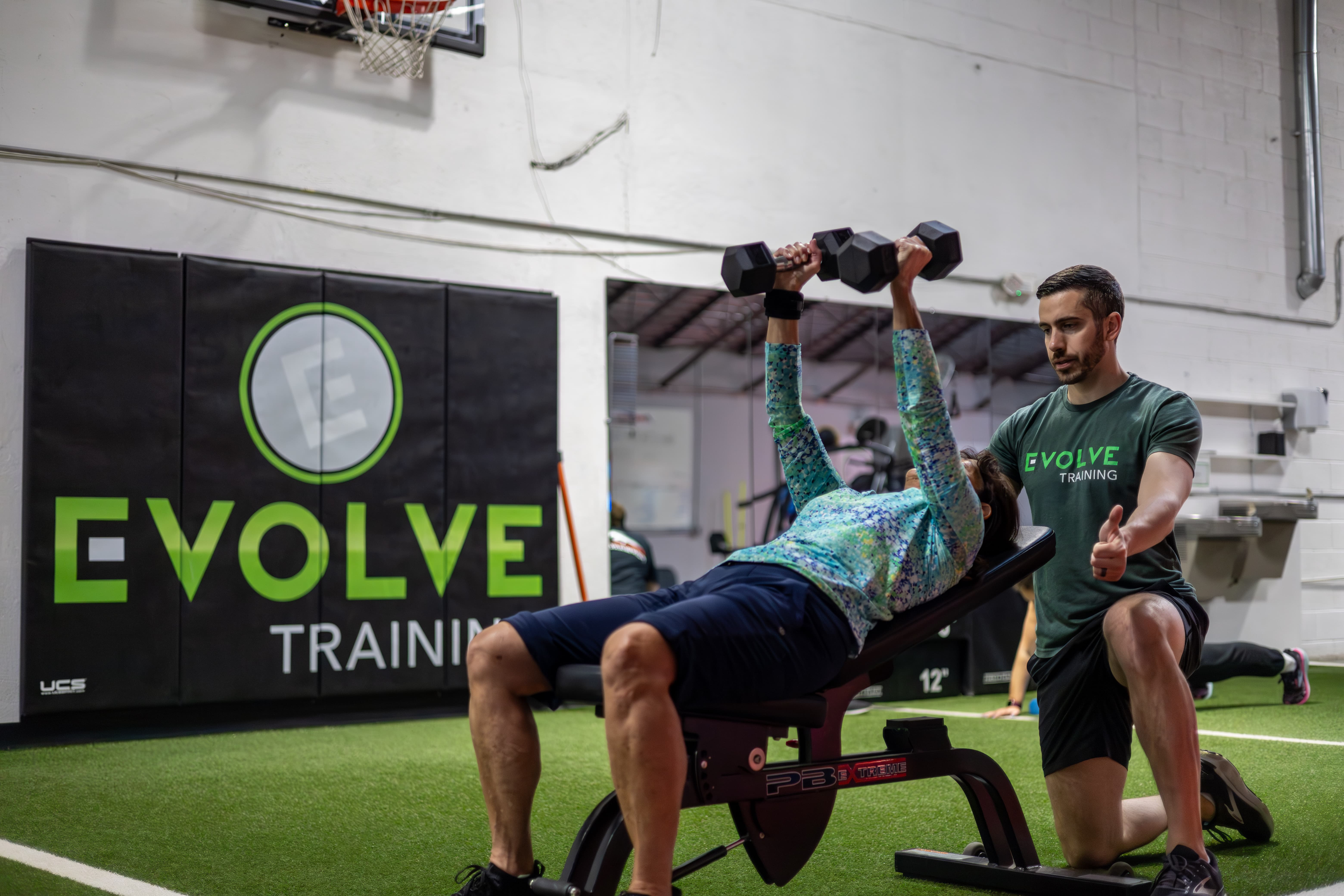
- Upper body push exercises such as pushups, chest press, and overhead press. These movements target the chest, triceps, and shoulders
- Upper Body Pull exercises like lat pulldowns and rows, working the back muscles.
- Single-leg and single-arm exercises to improve balance, coordination, stability, and even out strength between both sides of the body. Any of the above exercises can be made single sided
- Core exercises that challenge your ability to stabilize, rotate, and resist movement—not just traditional crunches. Such as pallof presses, weighted rotations, farmer carries, medicine ball slams and more!
Most importantly, your workouts should progress over time.
Your body adapts to what you ask it to do. If you continue using the same weights and doing the same number of repetitions forever, eventually the exercise becomes less challenging. Increasing weight, repetitions, range of motion, or the difficulty of an exercise over time gives your muscles and bones a continued reason to adapt. Your training doesn't have to look exactly the same at 25, 35, 45, or 55. It just needs to continue challenging you appropriately.
Think of your strength training as an investment. You're not just exercising to burn calories today. You're building the muscle, strength, balance, and bone health that your future self is going to rely on. Two to three well-designed strength workouts each week, combined with regular walking or other weight-bearing activity and cardiovascular exercise, can go a long way toward keeping you strong, capable, and active.
Menopause is a major transition, but it doesn't mean your best years of being active and strong are behind you. In many ways, this is when strength training becomes even more important.
You can't control your hormones. You can't stop yourself from getting older. But you can control how you support your body through those changes. Build strength. Maintain your muscle. Challenge your bones. Keep moving. Take care of your cardiovascular health. And most importantly, keep training for the life you want to live!
If you have questions about how to safely strength train before or during menopause, contact us here!